
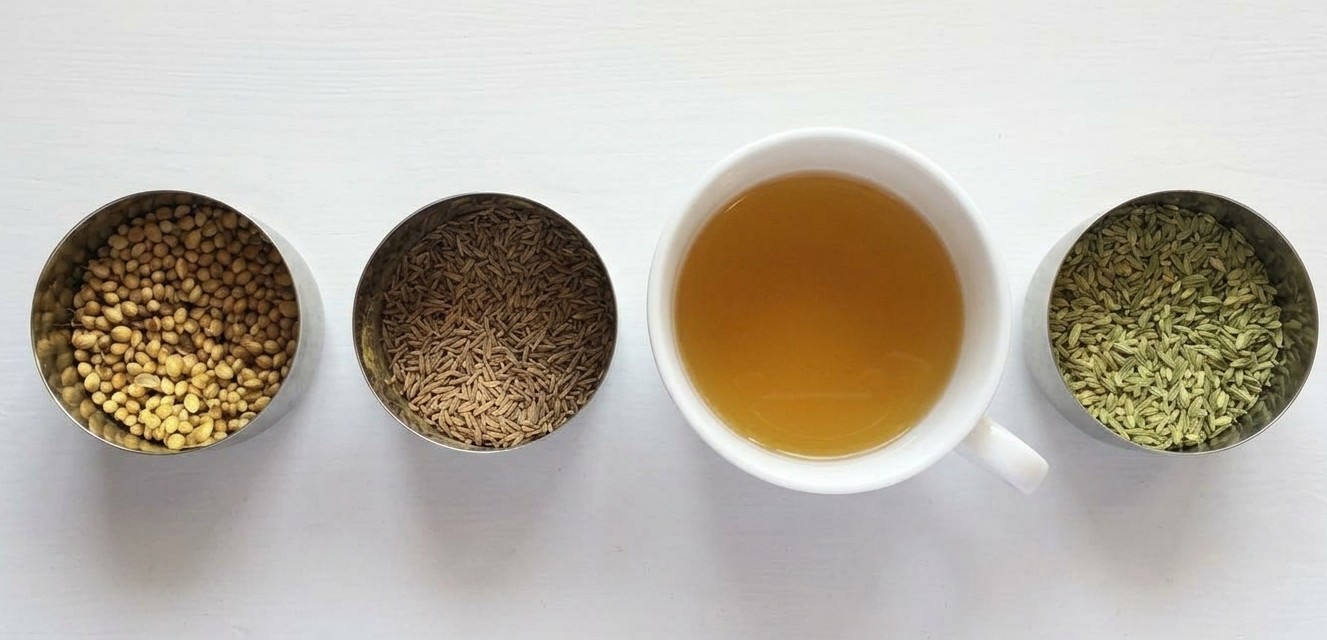
Ayurveda has many complicated herbal formulas. One of its most useful remedies is also one of the simplest: CCF tea, made from equal parts cumin, coriander, and fennel seeds. These are ordinary kitchen spices. Brewed together, they make a mild, slightly sweet, earthy tea. Many Ayurvedic practitioners recommend it as a daily support for digestion.
Why these three seeds
Ayurveda, like other natural healing systems, sees good health as resting on agni, the digestive fire. When agni is weak or irregular, food is not fully digested and leaves a sticky, slightly toxic residue called ama. CCF tea is meant to keep agni steady throughout the day and help clear ama. Its goal is not to cure one particular problem. Classical texts such as the Charaka Samhita and Bhavaprakasha describe each of the three seeds as both deepana, which kindles digestive fire, and pachana, which digests existing ama.
Each seed adds something different:
Cumin is warming and kindles appetite and digestion.
Coriander is cooling and soothing, which helps balance heat and acidity.
Fennel is sweet and calming, and it eases gas and cramping.
The tea’s qualities
What makes CCF special is balance. It gently stokes the digestive fire or agni without overheating the body. Because of this, it is considered tridoshic, meaning it suits Vata, Pitta and Kapha all three body types alike. Traditionally, it is used for gas, bloating, cramping, indigestion, hyperacidity, poor absorption, constipation, loose stools, and fluid retention. It is also said to help the body absorb nutrients and to support the lymphatic system. And since the immune system is closely connected to our digestive system, this tea is also good to drink during the upcoming cold and flu season.
How to make it
- ½ teaspoon cumin seeds
- ½ teaspoon coriander seeds
- ½ teaspoon fennel seeds
- 4 cups water
Bring the water and seeds to a boil. Let it boil for 5–10 minutes, depending on how strong you like it. Strain it into a thermos.
If you’d rather steep it, pour hot water over the seeds and let it sit for 10 minutes, then strain.
For convenience, you can mix a larger jar of the three seeds in equal parts and use one teaspoon per batch.
When to drink it
Between meals: The traditional advice is to sip it warm throughout the day, and between meals is ideal. This is when it best helps flush the toxins and kindle digestion.
After a heavy meal: A small cup can ease heaviness and bloating.
Sip it, don’t gulp it: Drink it warm or hot, in small sips.
During a cleanse or fast: It is a gentle companion on simple-diet or fasting days, and when easing back into food.
A gentle daily practice
CCF tea works best as a habit, not a quick fix. Make a fresh thermos each morning, sip it through the day for a few weeks, and notice how your digestion responds. It is gentle and safe for most people. If you are pregnant, take medication, or have a chronic digestive condition, check with your health practitioner first.
Ramesh Bjonnes

Ramesh Bjonnes has been teaching and writing about yoga philosophy and history for the past 25 years. He is the co-founder of the Prama Institute, a yoga retreat center in the Blue Ridge Mountains of North Carolina, USA, where he is director of the Prama Wellness Center. He is the author of three books on yoga and Tantra, including A Brief History of Yoga. His forthcoming book is titled The Lost Teachings of Tantra. Websites: www.prama.org www.rameshbjonnes.org
Books

Sacred Body, Sacred Spirit
Only – $12.40
Other Blogs Posts

Intermittent Fasting or Calorie Counting?
Ramesh Bjonnes Many people today are struggling with obesity, diabetes, and heart disease, and they often try some kind of weight loss program to shed extra pounds, reduce blood sugar and blood pressure. If done right and maintained, these methods work. But is one...

The World’s Worst Foods
Ramesh Bjonnes What are the three worst types of foods? Sugar, animal- and trans fats, and salt. Refined sugar increases glucose levels in the blood and may cause diabetes and heart disease. Americans consume on average 30 teaspoons of sugar per day. Sugar + refined...
